The story
Life in The SLO County Outback
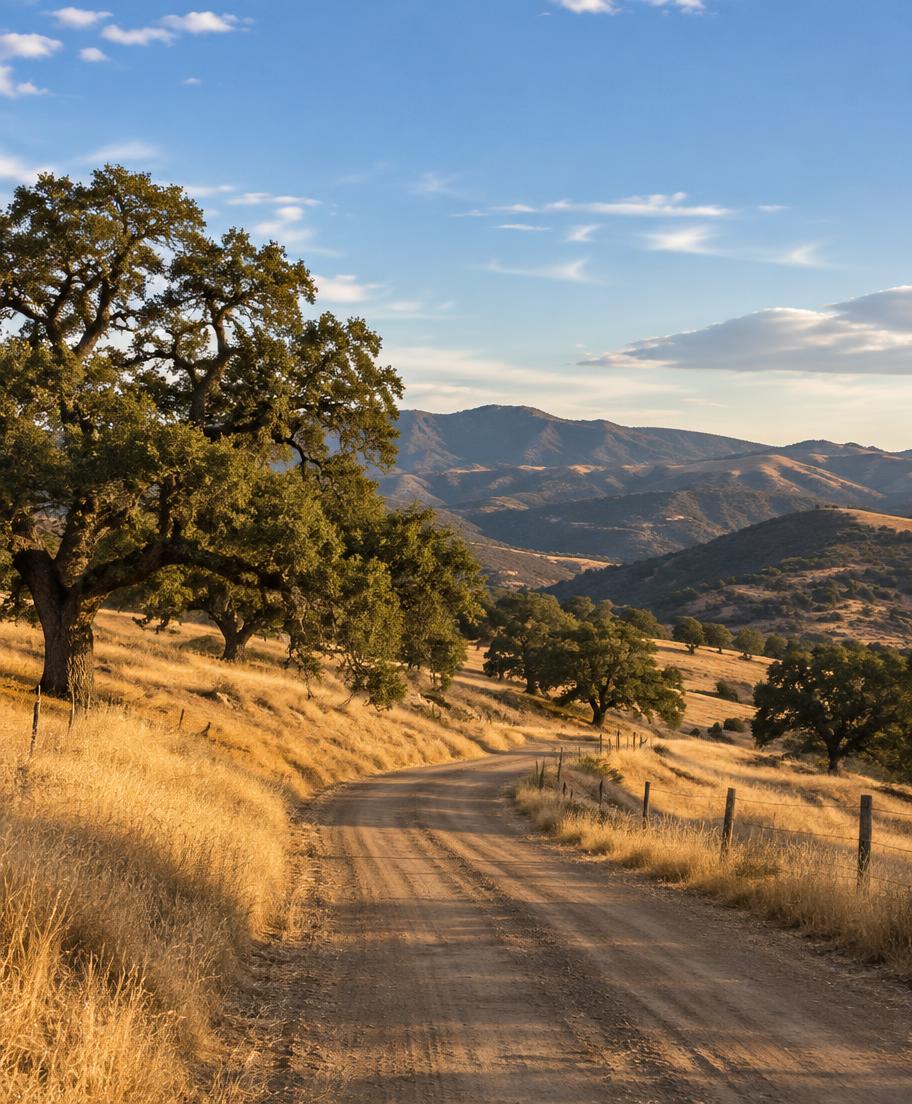
The area generally described as SLO County's "outback" is the rolling, largely unincorporated ranch and farm country east of Highway 101 and the coastal hills, centered loosely on the small communities of Santa Margarita (on Highway 58), Creston, Pozo, and California Valley, which borders the Carrizo Plain. This is cattle-ranching and dry-farming country of oak woodlands, grazing land, and open grassland basins, in contrast to the denser coastal cities and the Paso Robles wine region to the north.
California Valley sits at the edge of the Carrizo Plain National Monument, home to Soda Lake — the largest remaining natural alkali wetland in Southern California — and Painted Rock, a site of Native American rock art, jointly managed by the Bureau of Land Management, California Department of Fish and Wildlife, and The Nature Conservancy.
Pozo, 17 miles east of Santa Margarita, is best known for the Pozo Saloon, a historic live-music venue that has hosted touring acts including Willie Nelson and Merle Haggard. Because real estate here consists of large rural parcels, ranches, and small rural subdivisions rather than dense residential tracts, this part of the county is typically marketed to buyers seeking acreage, privacy, and a working-ranch or off-grid lifestyle.
The history
Where it began
The Salinan people lived in the northern part of San Luis Obispo County and the Chumash in the southern part, with the two groups' territories meeting in the area that became the Santa Margarita Valley; an archaeological site near the Santa Margarita Ranch house shows evidence of Native American occupation dating back roughly 6,500 years.
Santa Margarita Ranch dates to 1774, when Franciscan missionaries from Mission San Luis Obispo established an outlying farming operation there; by 1787 this had grown into the Asistencia Santa Margarita de Cortona, an "assistance mission" between Mission San Luis Obispo and Mission San Miguel, whose stone-and-mortar Asistencia building is considered the first such structure built in California. In 1841, the roughly 17,735-acre Rancho Santa Margarita was granted by the Mexican government to Joaquín Estrada.
Pozo began as "El Rancho San Jose" around 1854 and was renamed Pozo (Spanish for "well") in 1881 when it applied for a post office; the Pozo Saloon, established in 1858, is one of the oldest continuously recognized landmarks in the region, having closed from 1914 to 1967 before reopening. Further east, the Carrizo Plain — known to the Spanish as "Llano Estero," or salt marsh plain — was designated Carrizo Plain National Monument in 2001, protecting Soda Lake, Painted Rock, and grassland habitat traversed by the San Andreas Fault.