The story
Life in Paso Robles
Paso Robles sits along the Salinas River in northern San Luis Obispo County, straddling U.S. Highway 101 where it meets State Route 46, about halfway between Los Angeles and San Francisco. With a population of roughly 31,500, it is the largest of the three North County communities and functions as the area's commercial and civic hub, anchored by a historic downtown built around City Park.
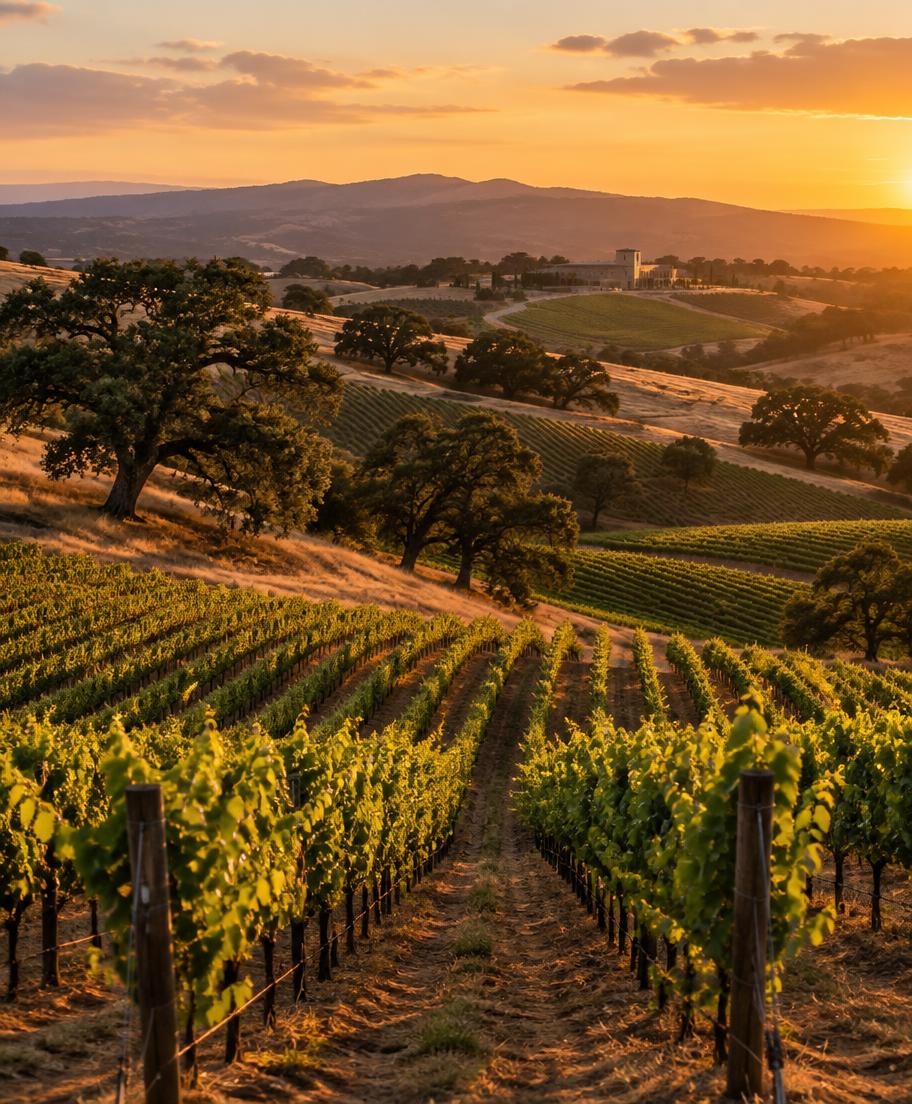
The city is best known nationally as the center of the Paso Robles American Viticultural Area, home to more than 200 wineries and roughly 40,000 acres of vineyard, drawing wine tourism alongside the region's older identity as farm and ranch country. Downtown Paso Robles retains a Western, small-town character around its central square, mixed with tasting rooms, restaurants, and the restored Paso Robles Inn.
Paso Robles' setting also reflects its origin as a hot-springs resort town — mineral springs discovered and used by Salinan people and later promoted to Victorian-era tourists remain part of the city's identity, even as agriculture (it was once called the 'Almond City') and winemaking have come to define its economy.
The history
Where it began
Salinan people inhabited the Paso Robles area for thousands of years before European contact, and the Salinans and Northern Chumash both used the region's warm sulphur springs, which they and later Spanish missionaries called 'the Springs.' Mission San Miguel Arcángel, founded in 1797, lies near the area, and mission-era wine fermentation vats survive there today.
Following Mexican independence, Governor Manuel Micheltorena granted the roughly 26,000-acre Rancho El Paso de Robles to Pedro Narváez in 1844; the rancho passed to Petronilo Ríos the next year. In 1857, brothers Daniel and James Blackburn and Lazarus Godchaux purchased the rancho, with Daniel Blackburn developing the townsite that became El Paso de Robles.
The railroad reached Paso Robles in the late 1880s, and the city was officially incorporated on March 11, 1889, led by founders Blackburn and Drury James (uncle of outlaw Jesse James). In 1891 they built an elaborate bathhouse over the sulfur spring and the three-story Hotel El Paso de Robles — today the Paso Robles Inn. The city's wine industry traces to 1882, when Andrew York founded Ascension Winery (now York Mountain Winery), one of the region's earliest wineries.